By Iqbaal Abdi
London, (he Muslim News): Fars News Agency announced that the Djibouti airbase has become a legitimate target of the Axis of Resistance. This was after reports that Iran had received intelligence that US Marine Corps had been flown to the Middle East via the Djibouti airbase. In addition, there have been unconfirmed reports that the elite 82nd Airborne Division has been pre-positioned at Camp Lemonnier in Djibouti—the biggest and only permanent US military base in Africa.
With Ansar Allah (Houthis) announcing their involvement in the war by launching ballistic missiles towards Tel Aviv on the 28th March, separated only by a critical chokepoint in the Red Sea, the Houthis could now pose a real threat to US assets in Djibouti.
In addition to starting a new front, Houthi Deputy Information Minister Mohammed Mansour stated that if there was further escalation to the war, it would risk the closure of the Bab Al Mandab strait.
“The option of closing the Bab Al Mandab strait is a Yemeni option that can be implemented should the aggression against Iran and Lebanon escalate savagely, or if any Gulf state becomes directly involved in military operations in support of the Zionist entity or the United States,” Mansour said in an interview with Al-Monitor.
On the 3rd of April, this was reiterated by a post by the Iranian Parliament speaker Mohammad Baqer Qalibaf on X, which implied the Resistance could use the Bab al Mandab strait to cause further disruption to global energy supplies. The closure of the strait would, especially, be considered by Iran in the case of a ground invasion on the mainland or on Iranian islands, a source told Tasnim News.
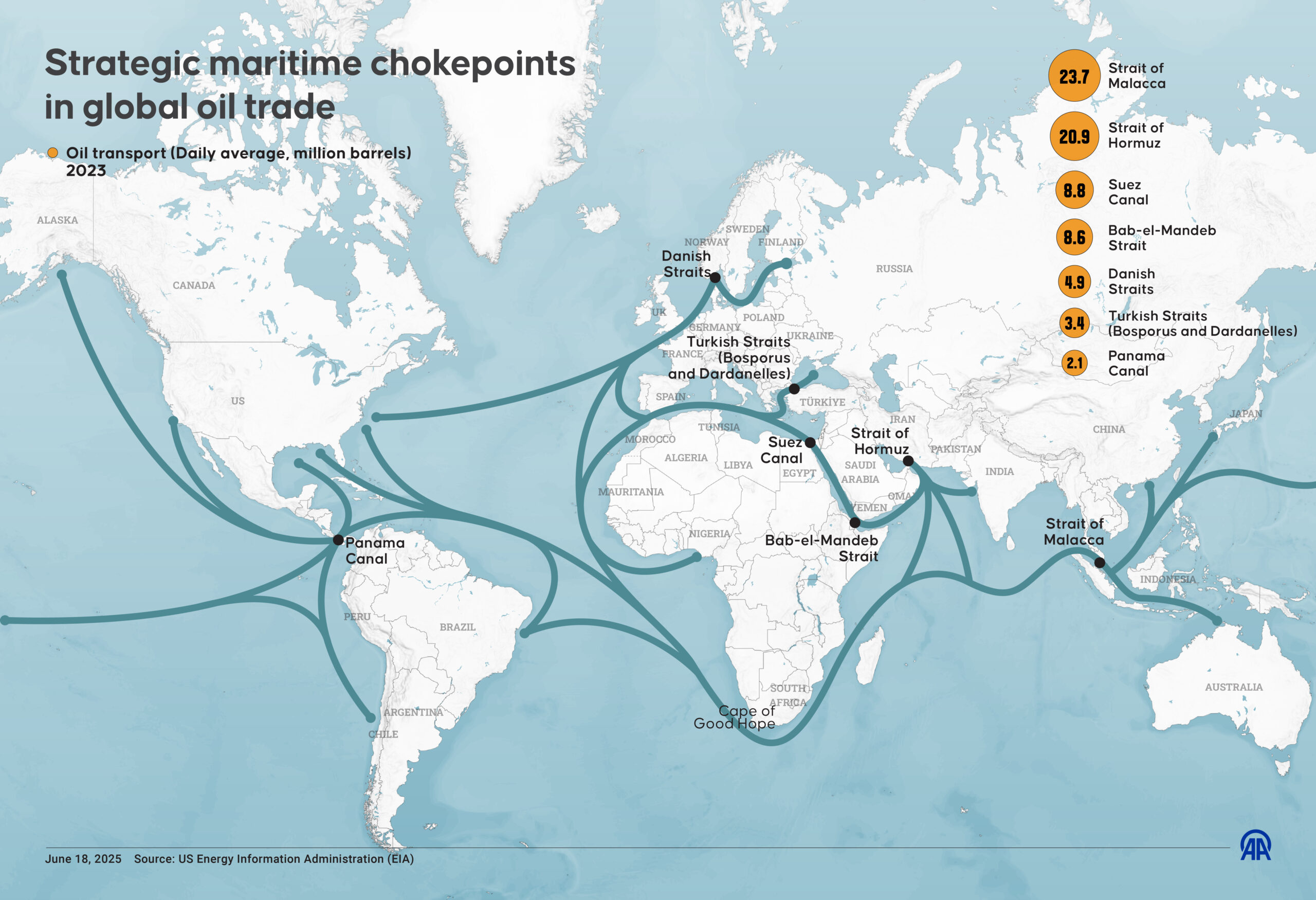
The strait, which lies on the Red Sea, connecting the Indian Ocean and the Mediterranean Sea via the Suez Canal, aids 15% of global shipments. With the closure of the Strait of Hormuz, the Red Sea maritime route has become vital to containing the global economic shock, which has already rippled through skyrocketing oil and gas prices.
Saudi Arabia has already begun utilising its strategic location by using the East-West pipeline that runs through the country to ship oil from Yanbu Port on the coast of the Red Sea and continue its shipments to Asia. It is estimated that the Yanbu port has begun operating at maximum capacity with a sharp increase of 800,000 to 4.5 million barrels of oil being shipped out through this critical strait.
In recent years, the Houthis have had success in disrupting maritime trade in the Red Sea in protest of Israel’s genocide in Gaza. They attacked ships traveling through the strait, forcing freight companies to reroute around Africa, passing the Cape of Good Hope in South Africa, adding 10 days and an extra cost of $1 million per voyage.
If the Houthis now threaten Bab al Mandab, it could have catastrophic ramifications for the existing economic crisis.
Israel has begun exploring partnerships in the Horn of Africa to counter the Houthis in the Red Sea.
The Israeli think tank, the Institute for National Security Studies, published a report in November 2025 stating Somaliland could serve as a base for intelligence collection and monitoring of the Houthis and their military build-up. A month later, Netanyahu announced the official recognition of Somaliland, a self-declared autonomous region of Somalia.
On March 11th, Bloomberg reported that Israel is planning for a potential base in Somaliland. Minister Khadar Abdi said they would pursue ‘a strategic security relationship’ with Israel, which ‘encompasses a lot of things.’ Abdi suggested that Somaliland would be open to a military base but had yet to be analysed. Bloomberg stated that Israel had already surveyed for a potential base last June, when security officials visited the region’s coastline.
Currently, Berbera, a port city in Somaliland, hosts UAE military facilities. According to the Middle East Eye, sources stated that these facilities had been developed in close coordination with Israel, with existing security agreements enabling the exchange of intelligence between the two signatories of the Abraham Accords.
Israel continues to spread its tentacles in the Horn of Africa by proposing a ‘hexagon of alliances,’ which many analysts expect Ethiopia to be part of. However, in the current illegal US-Israeli war, the Horn has taken a peripheral stage in the battle arena, which may shift with the Houthi response to the war.
[An infographic titled ‘Strategic maritime chokepoints in global oil trade’ created in Istanbul, Turkiye on June 18, 2025. Photographer: Muhammed Ali Yiğit/AA]